I have long desired a Paul Reed Smith guitar. They have an elegant aesthetic and sophisticated construction. All this comes at a high price of course.
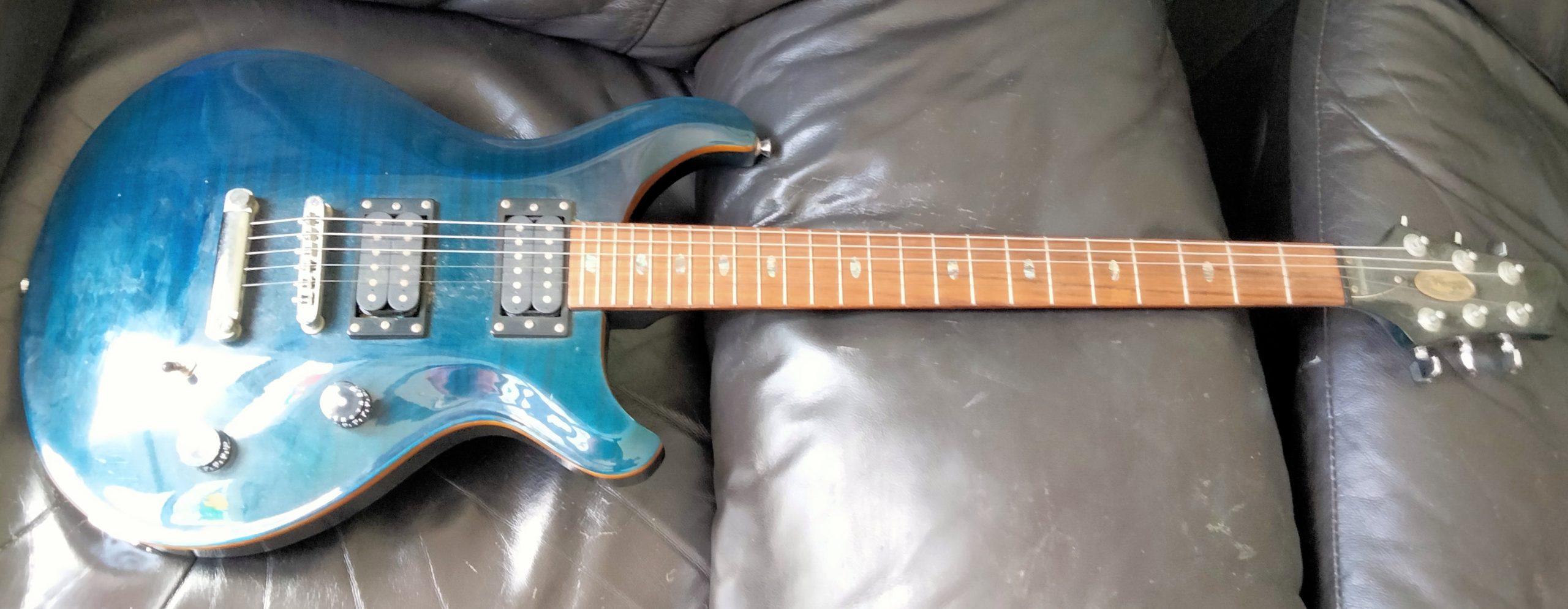
Unless you find a cheap used guitar and use it as a modification platform, like I did
This is a well trodden route for Stratocaster type guitars. Cheap “copies” are readily available as are upgrade parts. Clean it up, upgrade hardware as required and and give it a good setup. You can end up with a very nice guitar for not much money. Unfortunately suitable PRS copies are rare.
I got lucky when I bought this for just £35 from a charity shop. Filthy, but complete and with only minor cosmetic damage. Quite a looker too.
This looks to be based on the PRS SE range. Set neck. Carved top. Mahoganny construction. Weighs in at 3.45 Kg (7.6 lb), which is quite heavy. 25 inch scale 24 fret neck.
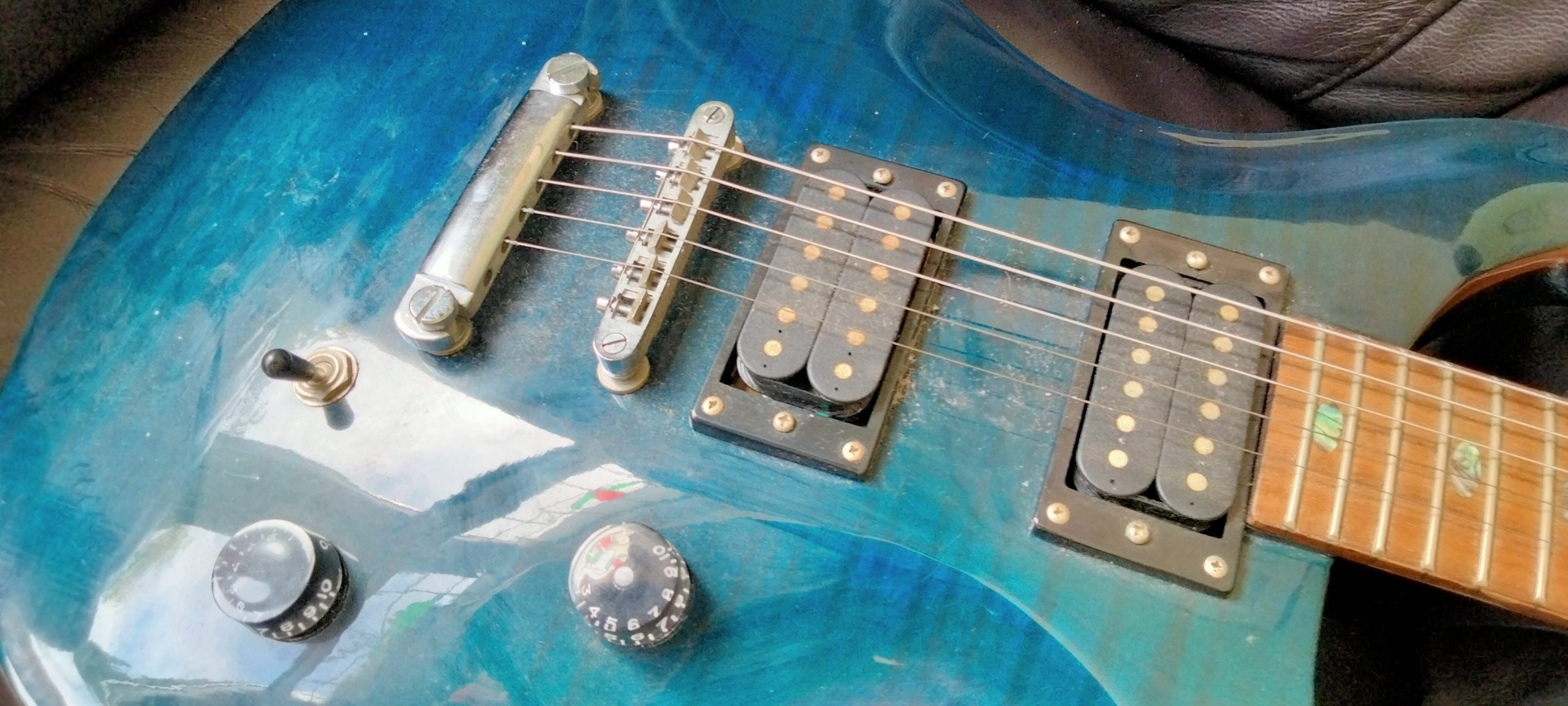
It doesn’t have a trem but that isn’t an issue for me. The tune-o-matic bridge and tailpiece are not often used on PRS, who have their own design wrap around, but are to be expected on a cheap copy.
The other obvious deviations from PRS are the headstock shape and the inlays. Copying either of these would certainly get lawyers involved.
This is as close as I’m likely to get to the real thing and could make a great platform to build on. Before I spend time or money on upgrades, I’ll give it a good technical assesment. You can’t polish a turd!
Technical assesment
The first test is to just try playing. It plays in tune with a nice low action. No buzzes at all, all the way up the neck. Intonation is spot on. I was able to play fast and accurately. Very pleasantly surprised.
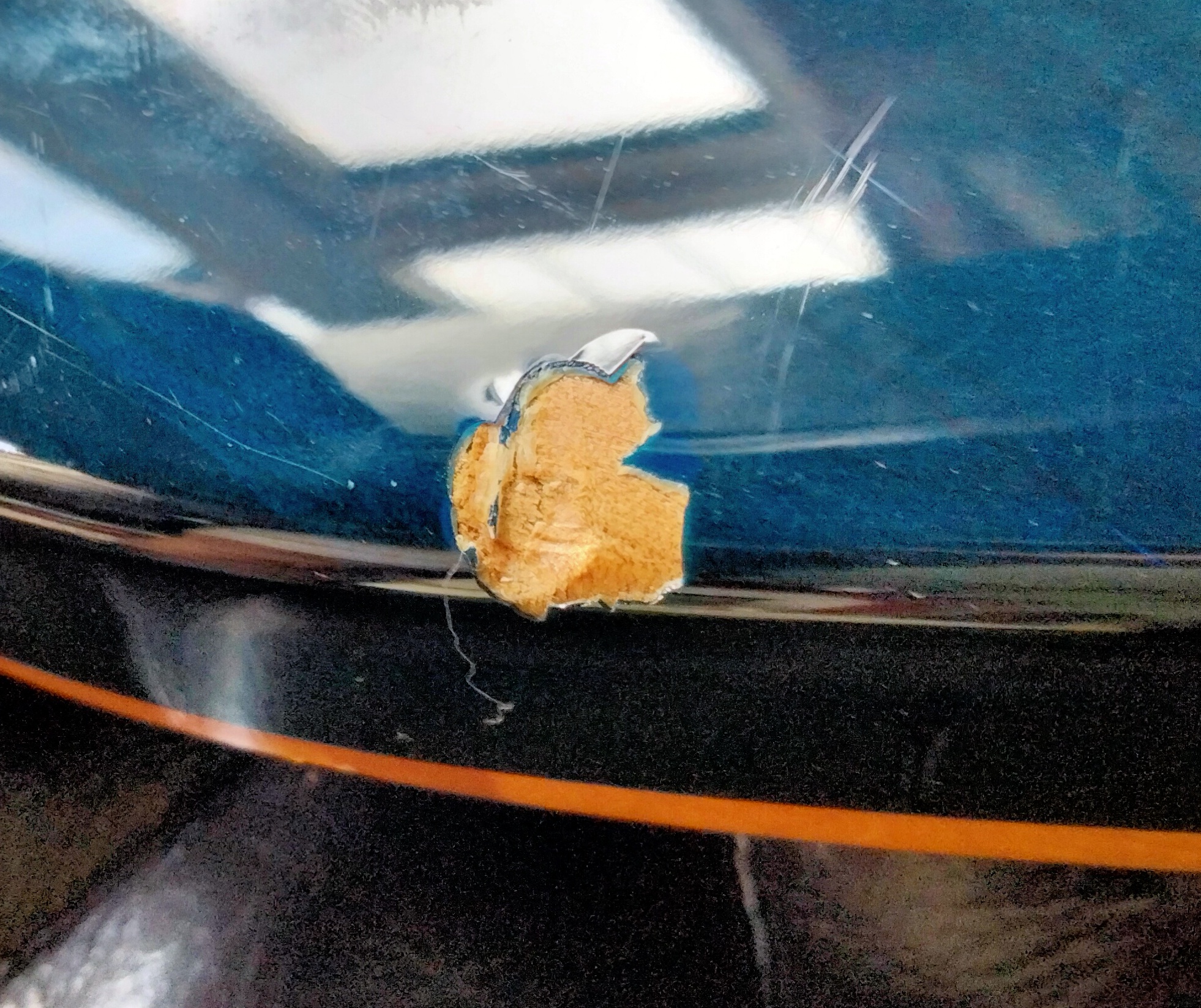
Inspecting the bodywork there is very little damage to report. Just one chip which goes through the finish to reveal what looks like a mahogany body below. It’s on the edge, so isn’t even visible from the front. Fit and finish is very good.
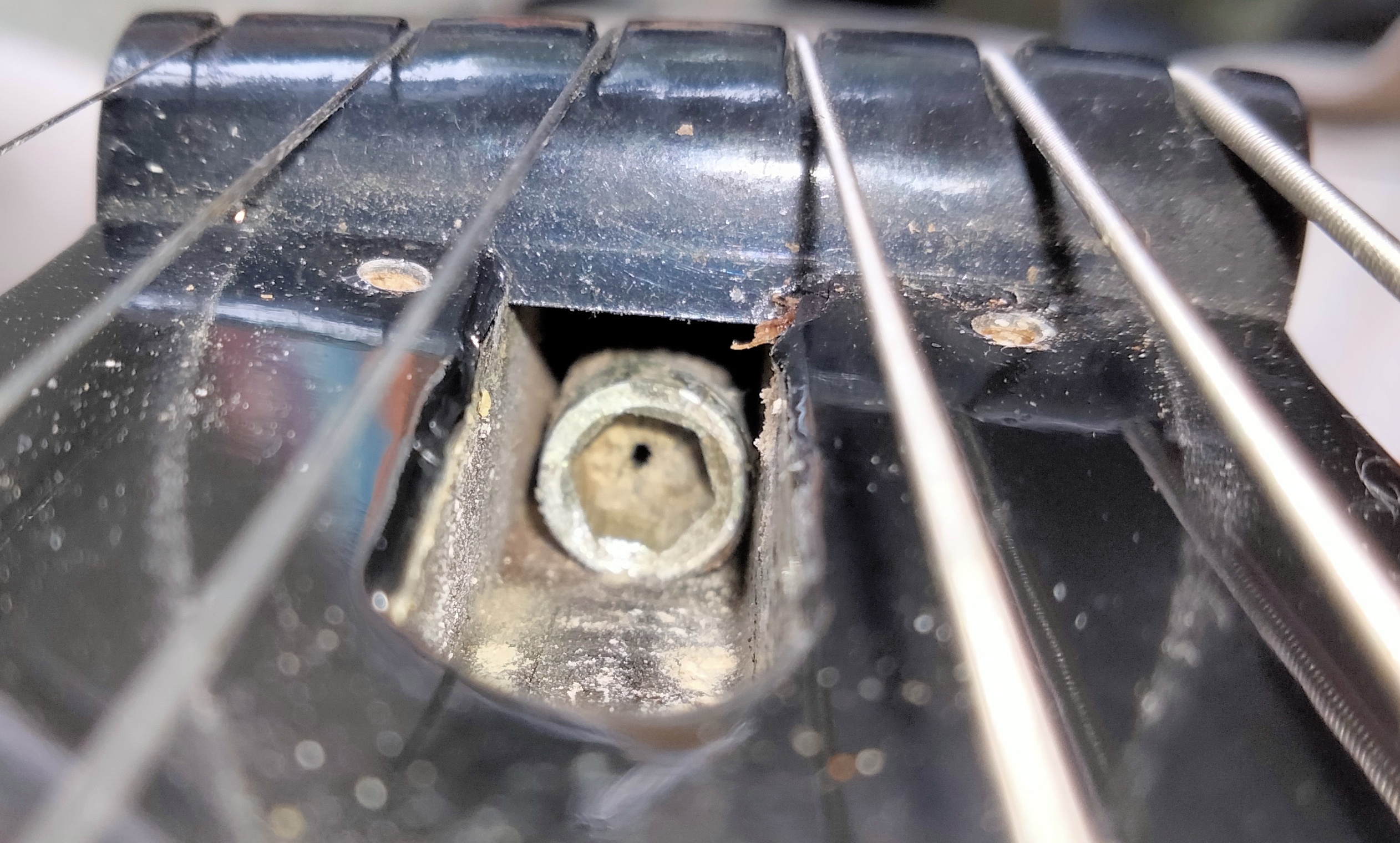
Looking along the neck it is straight with no sign of twist. It looks to have a tiny amount of relief (confirmed with a straight edge). I was surprissed to find that the truss rod is actually lose. I nipped it up and gave 1/4 turn. That reduced the relief a little. Now it plays even better! I’ll come back to this later when I’ve finished my modifications and fitted fresh strings. This is a set neck, so any alignment problems will be difficult or impossible to rectify. Fortunately no problems found.
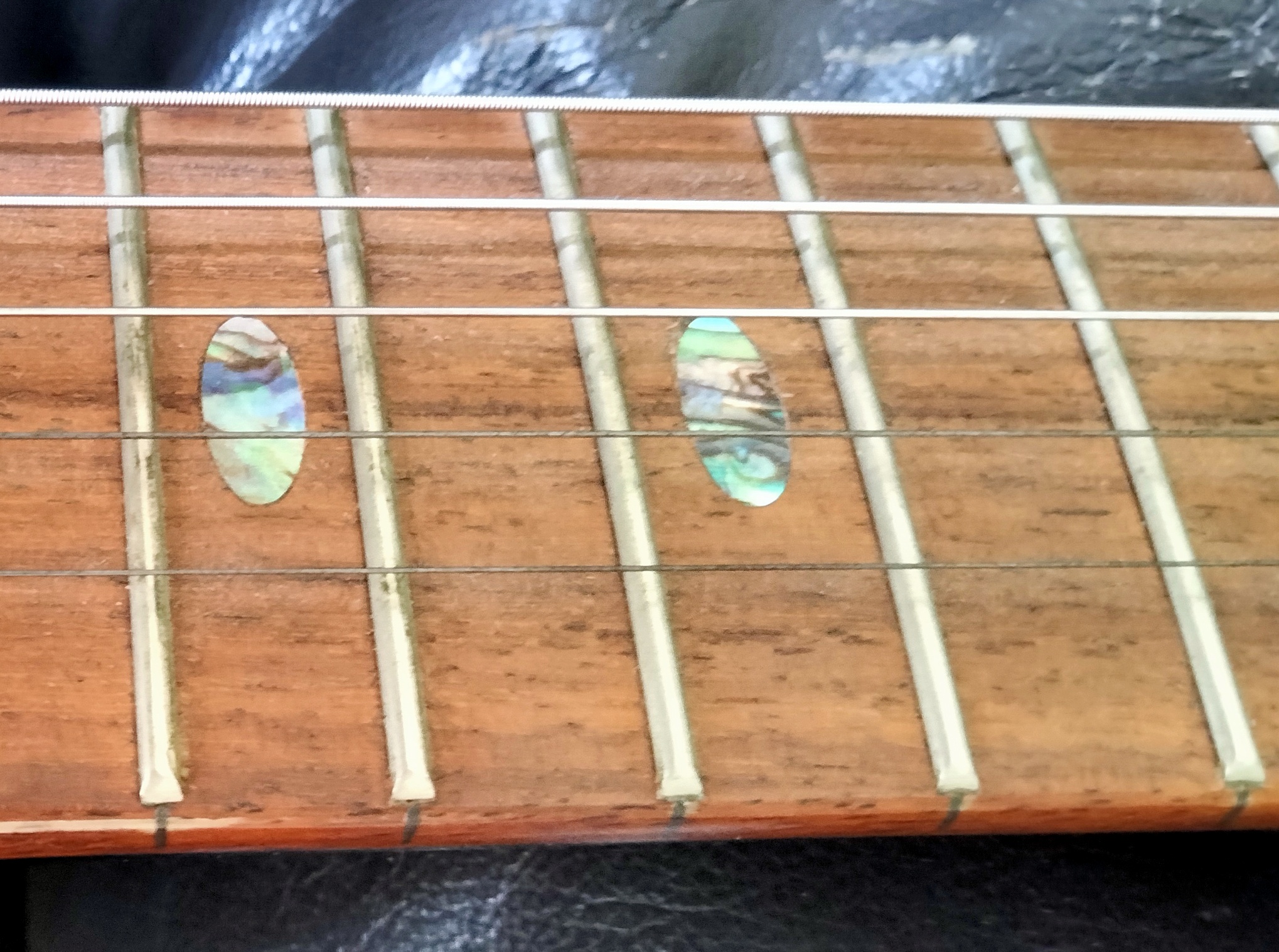
The frets look to be in excellent condition. There is evidence of some levelling having been done, but done well and leaving plenty of life in the frets. The nut is well fitted and nice and low. Bridge intonation is spot on. The tuning keys are a little glitchy but useable. I was able to tune up and it stayed that way, even with the horrible old strings still fitted.
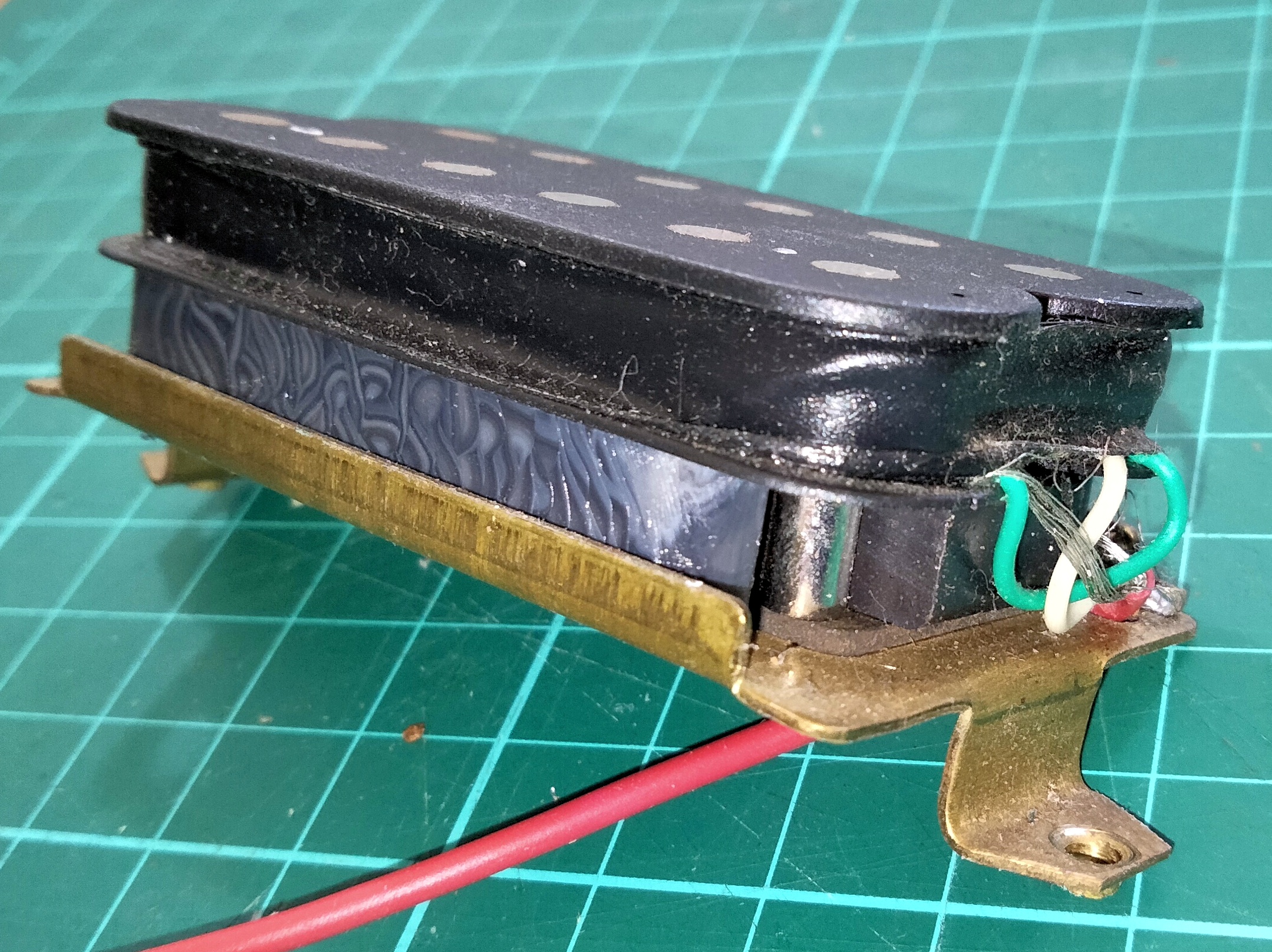
Now, the electronics. This is where the penny pinching shows. The pickups are not great. Ceramic Humbuckers with high resistance (12.8K) coil. I would expect a nice hot output, but these are insipid. They also look to be cheaply made and there are signs of rust on the pole pieces.
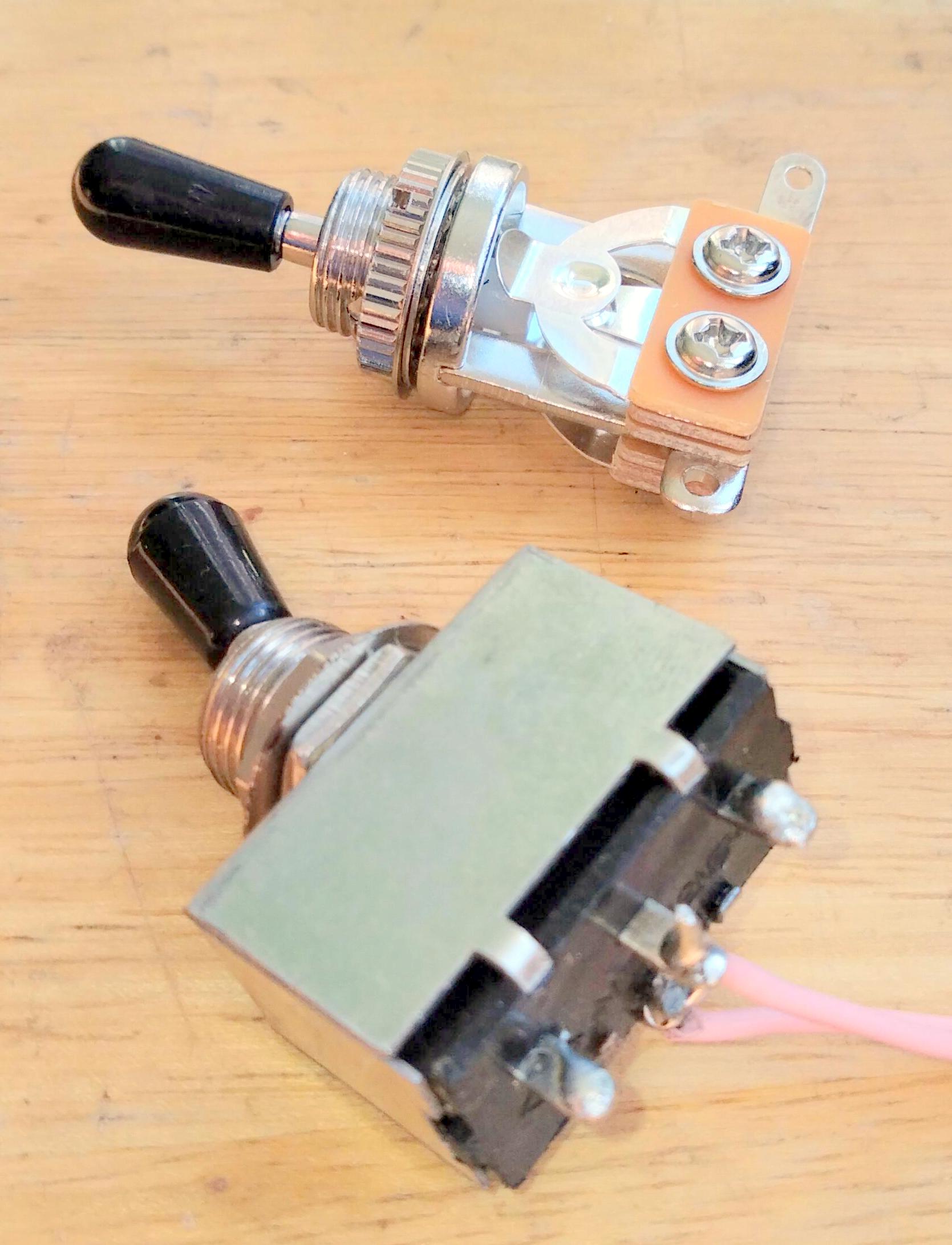
Pickup selector switch is sloppy, probably because it looks to be coming apart.
Lots to sort out with the electrics. this is where the bulk of the work will be.
Overall impression: A good solid platform to fix up. The woodwork and finish are very good. Frets level and un worn. Playability is surprisingly good, even without any setup work. Hardware looks and works well, so shouldn’t need replacing. Just the electrics to spend money on.
Bodywork
First job is a good clean up with a slightly damp cloth followed by a polish with Dunlop guitar polish. The fingerboard was very dry. Easily fixed with a few applications of Lemon Oil.
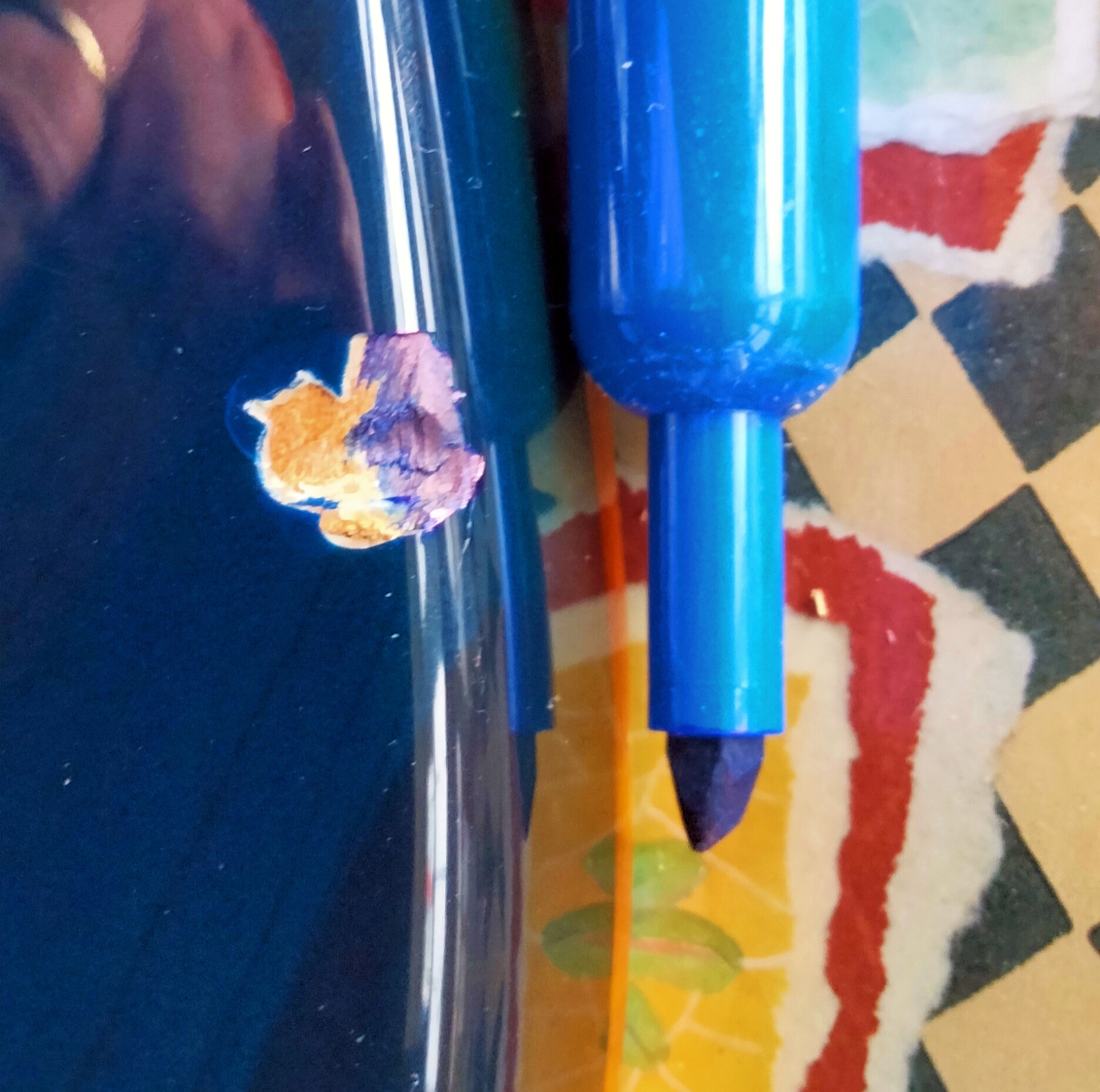
Just the one small chip to deal with. I raided my selection of nail varnishes (Don’t ask) but found no blue. I coloured the bare wood with a blue marker pen instead, then applied clear nail varnish.
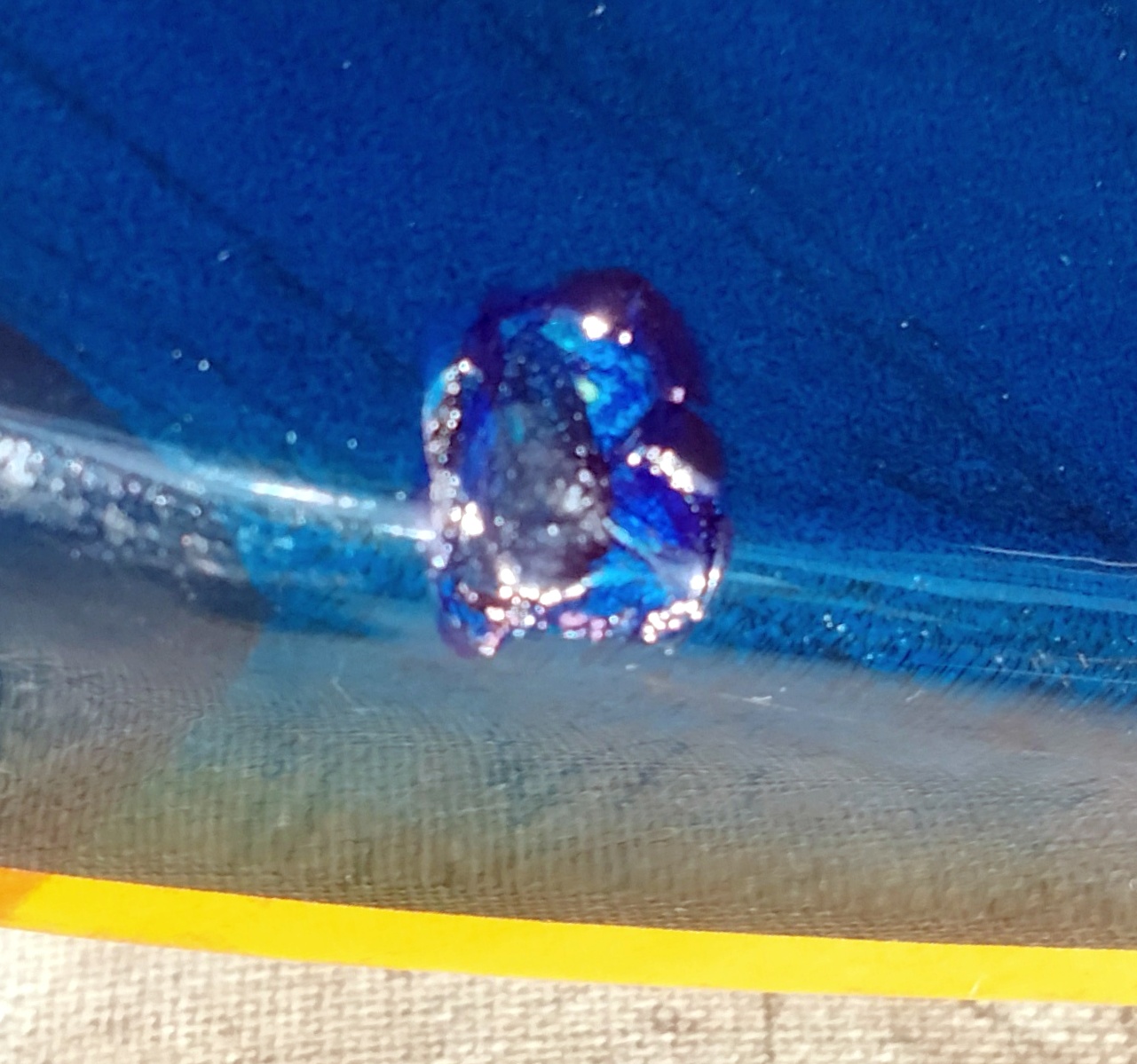
I gave it several coats over a week. It looks much better. I’ll give it a couple of weeks to set really hard before I attempt to sand it flat and polish.
Electrics
The first job is to find replacement pickups. To keep costs down I’m looking for something cheap or 2nd hand. Luck struck again when I quickly found exactly what I needed on Facebook Marketplace.
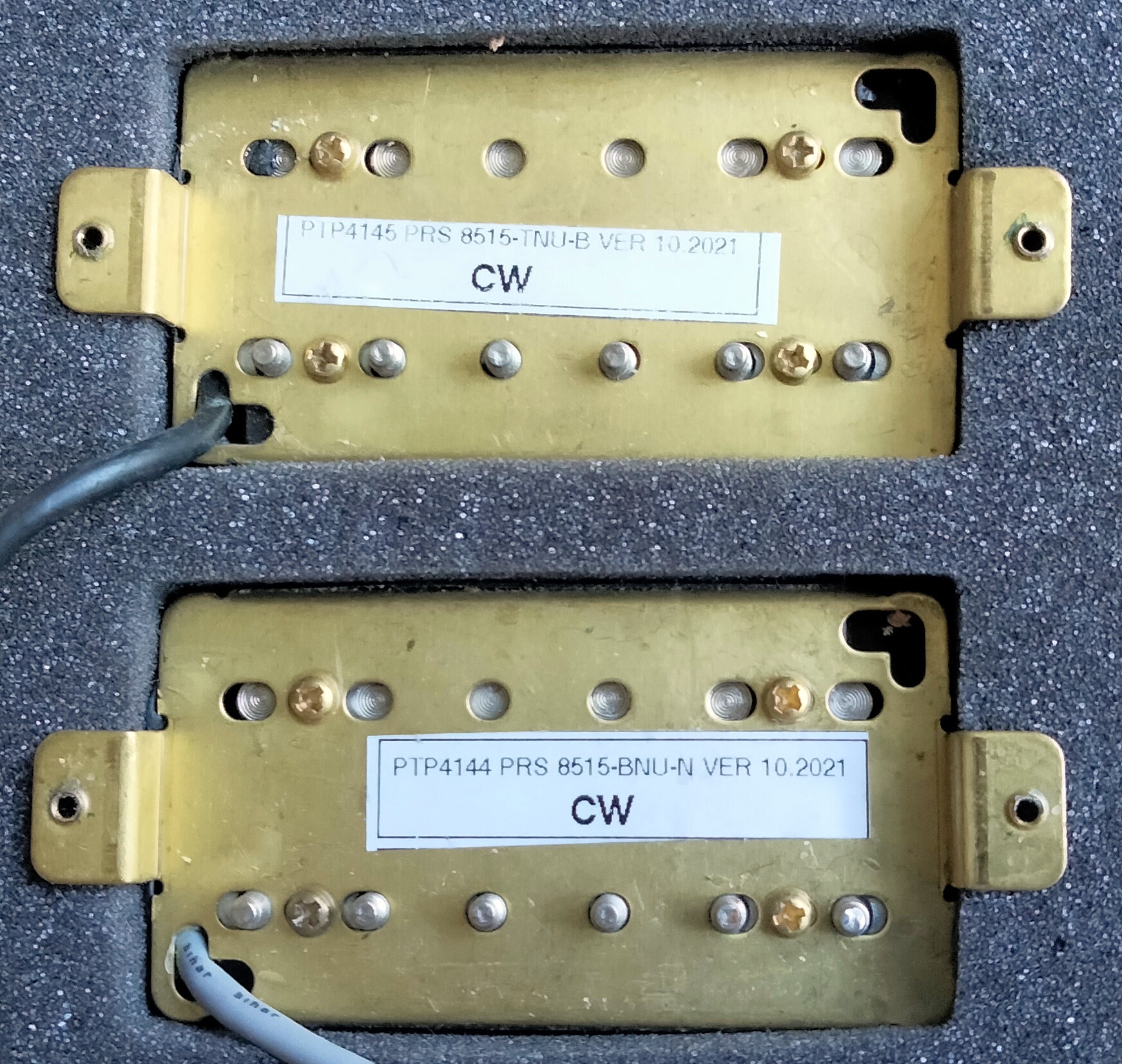
A set of original PRS 85/15 guitar pickups, removed from a PRS SE Custom 24. Just £50 got me the pickups, pots and Jack Socket. I already have a new toggle switch to use. All new electrics, with the bonus of coil tap.
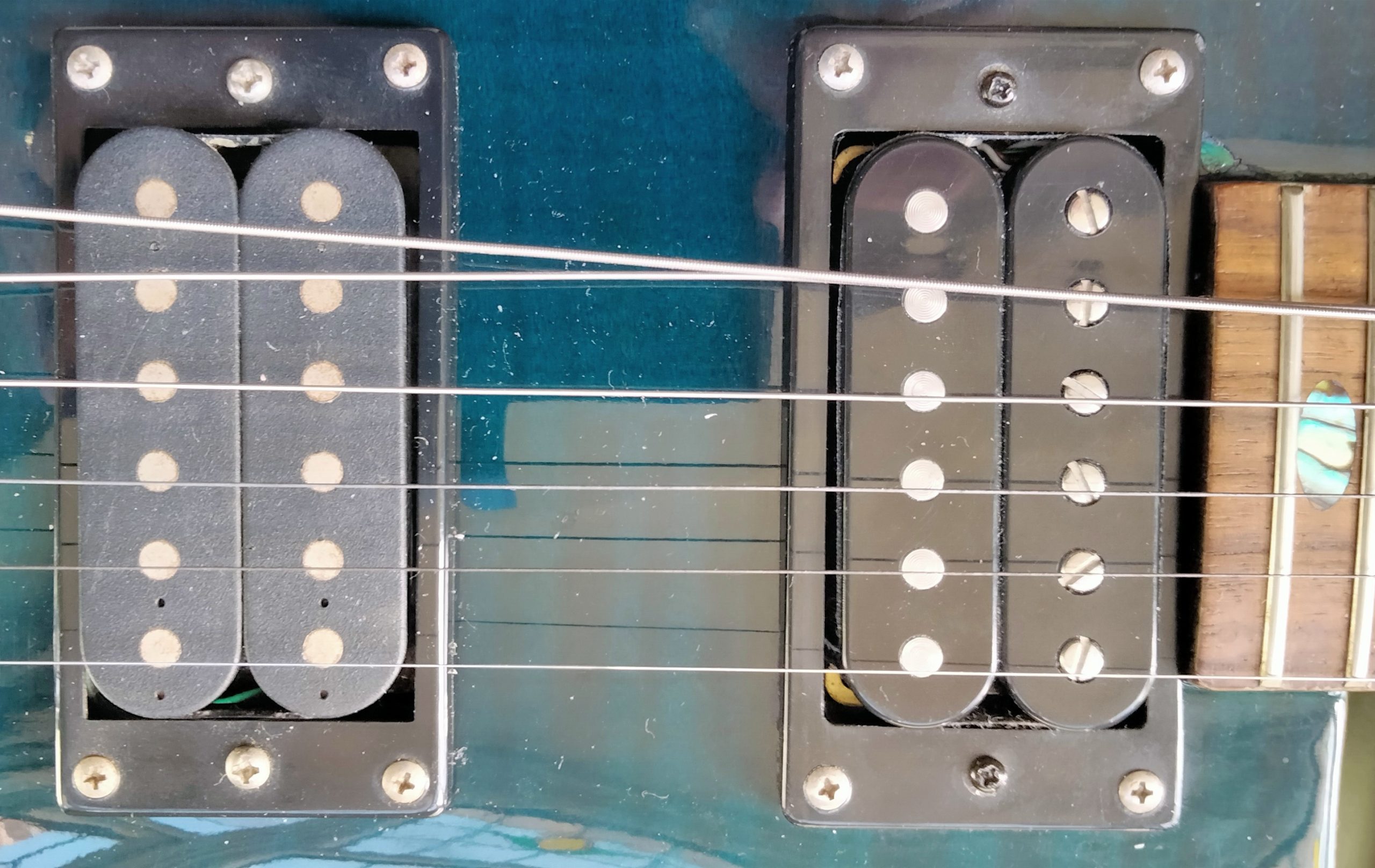
Installing the neck pickup I found that the fit left something to be desired. The pickup would not sit level. I figured out that the back plate was fouling against the pickup routing.
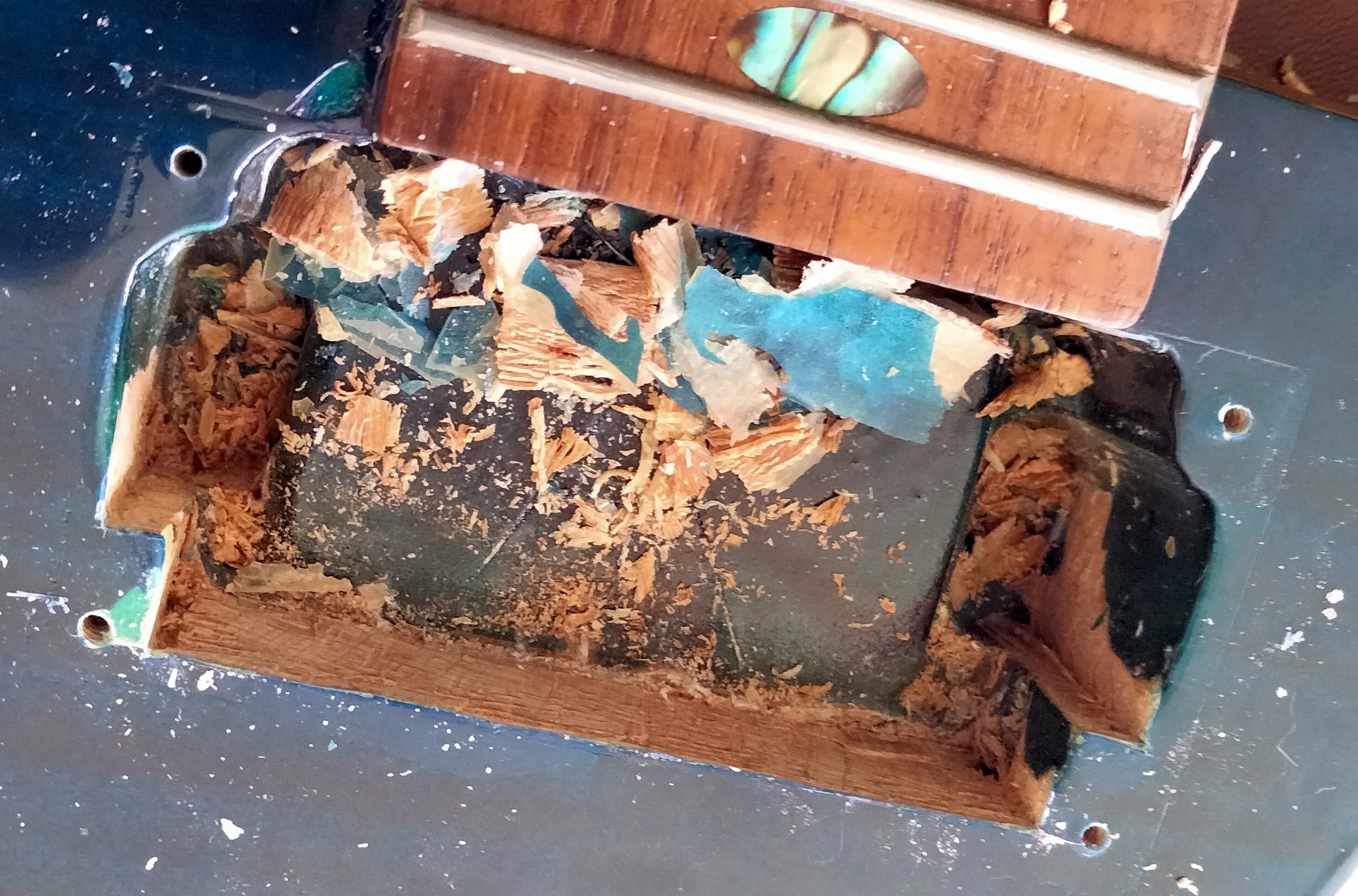
No other option. I had to enlarge the pickup cavity. A router with a suitable template would be the usual approach here. Unfortunately the set neck, which is not removable, would make this very difficult. Hand tools it is then. Make sure your chisels are very sharp and don’t attempt this unless you are confident of your woodworking skills.
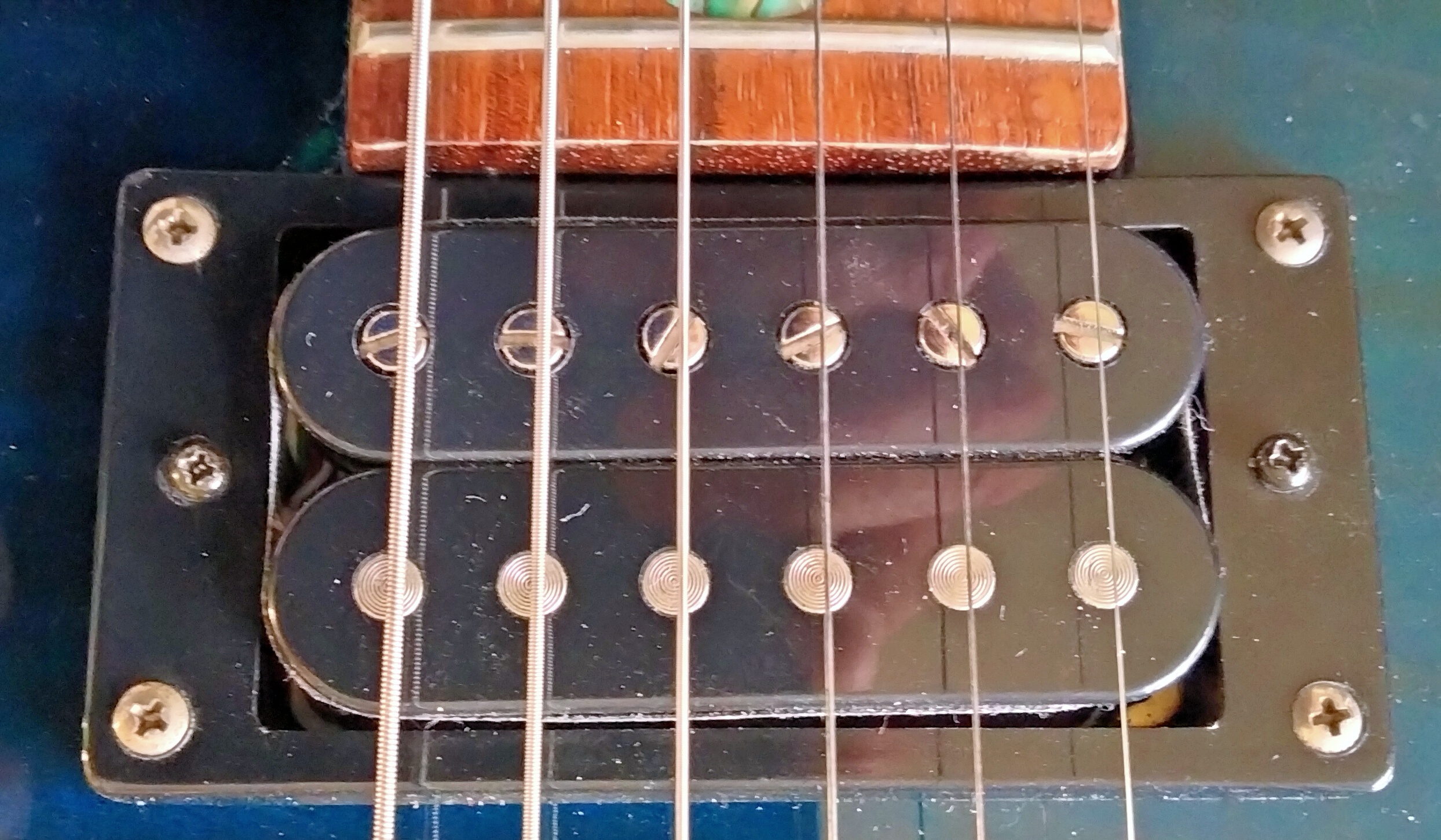
The pickup now sits well in the mounting ring and floats on it’s springs, allowing a full range of adjustment. The bridge pickup installed without problems.
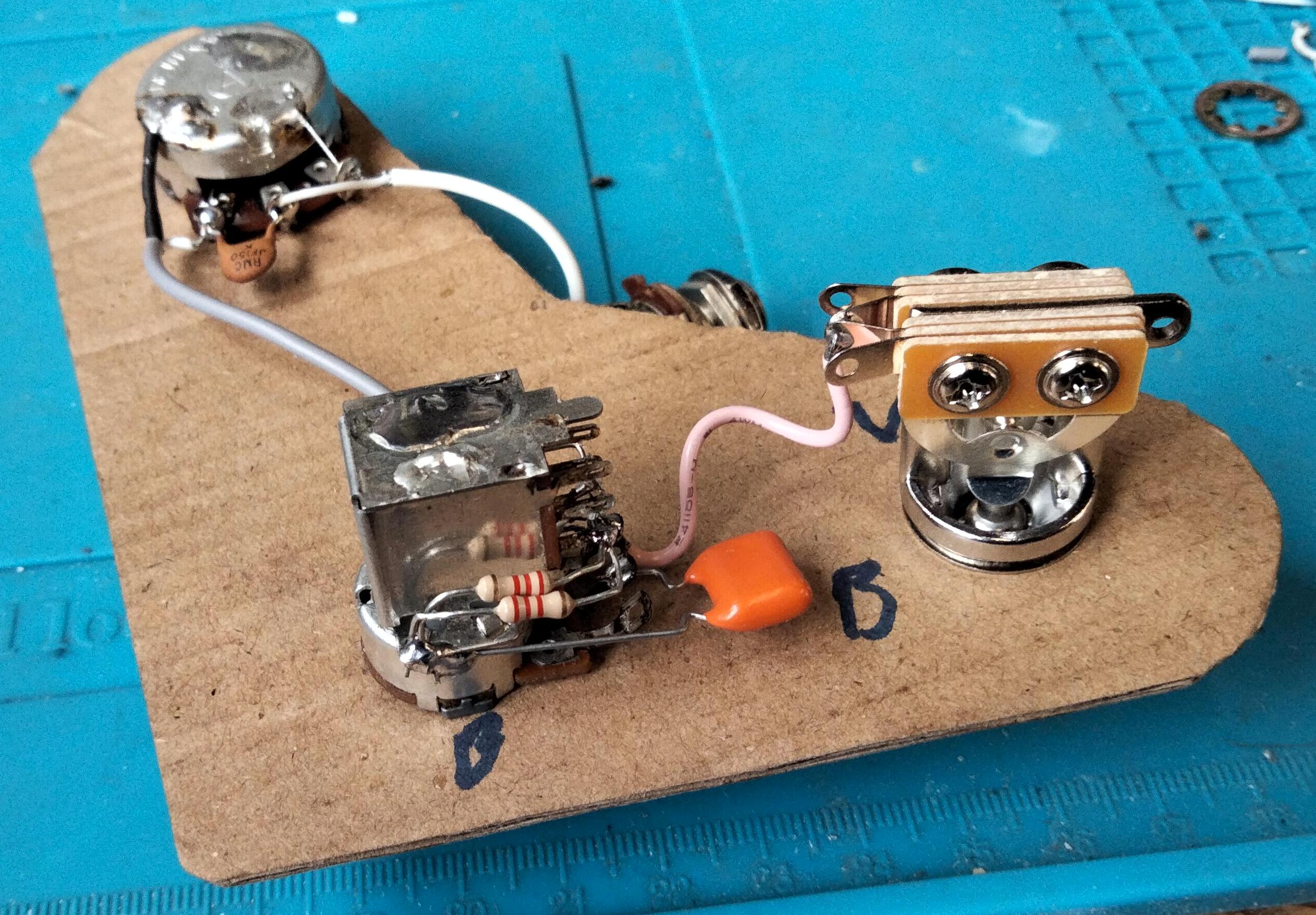
With the pickups installed it’s time to wire everything up. I cut out a piece of cardboard to match the control cavity so I could do most of the wiring outside the guitar.
I referred to the PRS SE24 Wiring diagram, available on their website. You’ll need this. The neck and bridge pickups are different. PRS use different wiring colours to everybody else, so generic wiring diagrams won’t help much. Also, they do a “partial coil tap” using resistor values to suit their pickups.
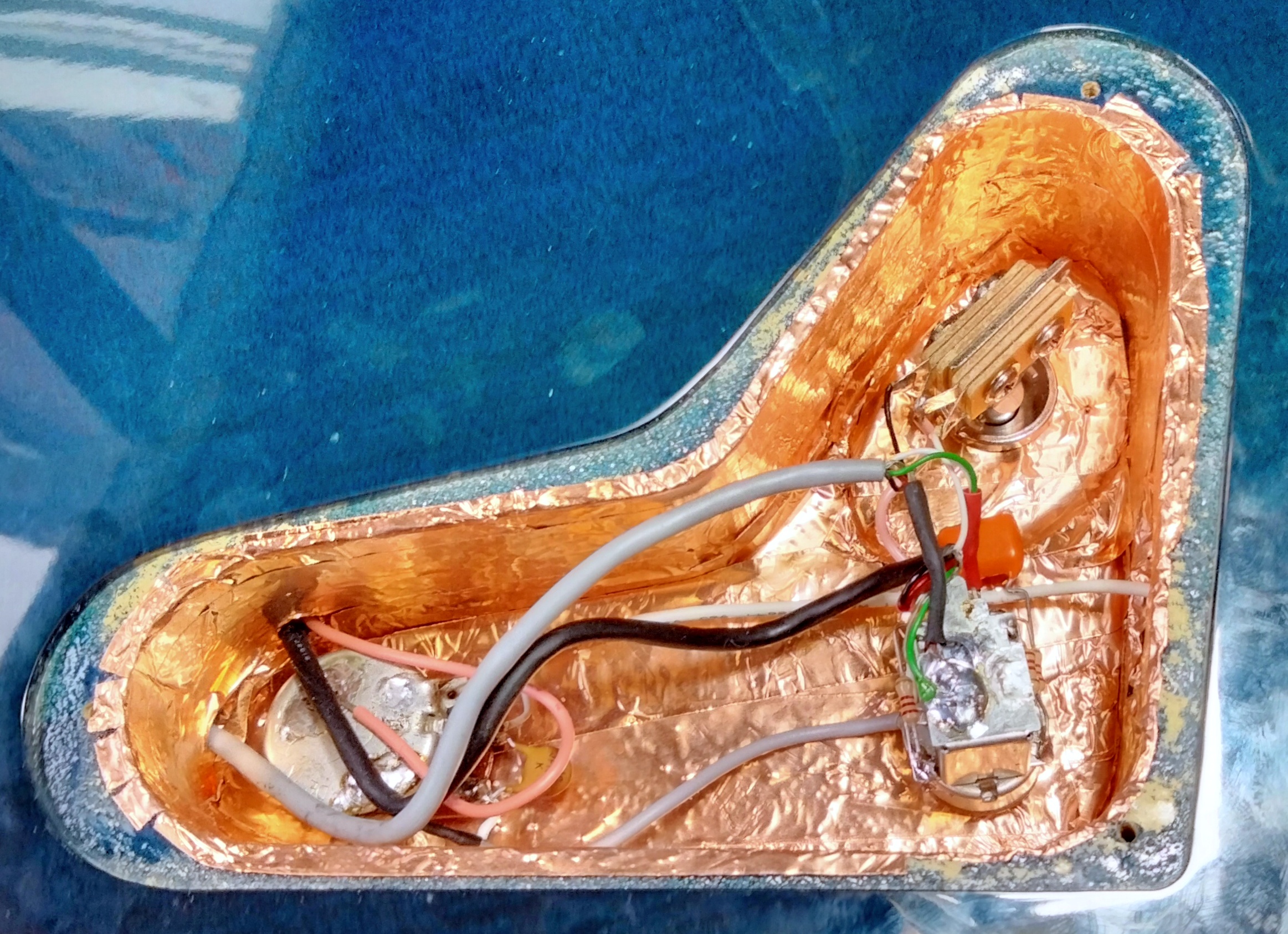
Before fitting the controls in the cavity I added copper shielding tape. This is not usually necessary for a Humbucker equipped guitar. I have a roll of tape and the guitar was apart anyway, so I just did it. Can’t do any harm.
Finishing Touches
I still have the horrible original strings fitted. They have been loosened and tightened many times as I worked on the electrics and pickups. Those tuning pegs are actually a bit rough in use. A clean and lube would probably fix them.
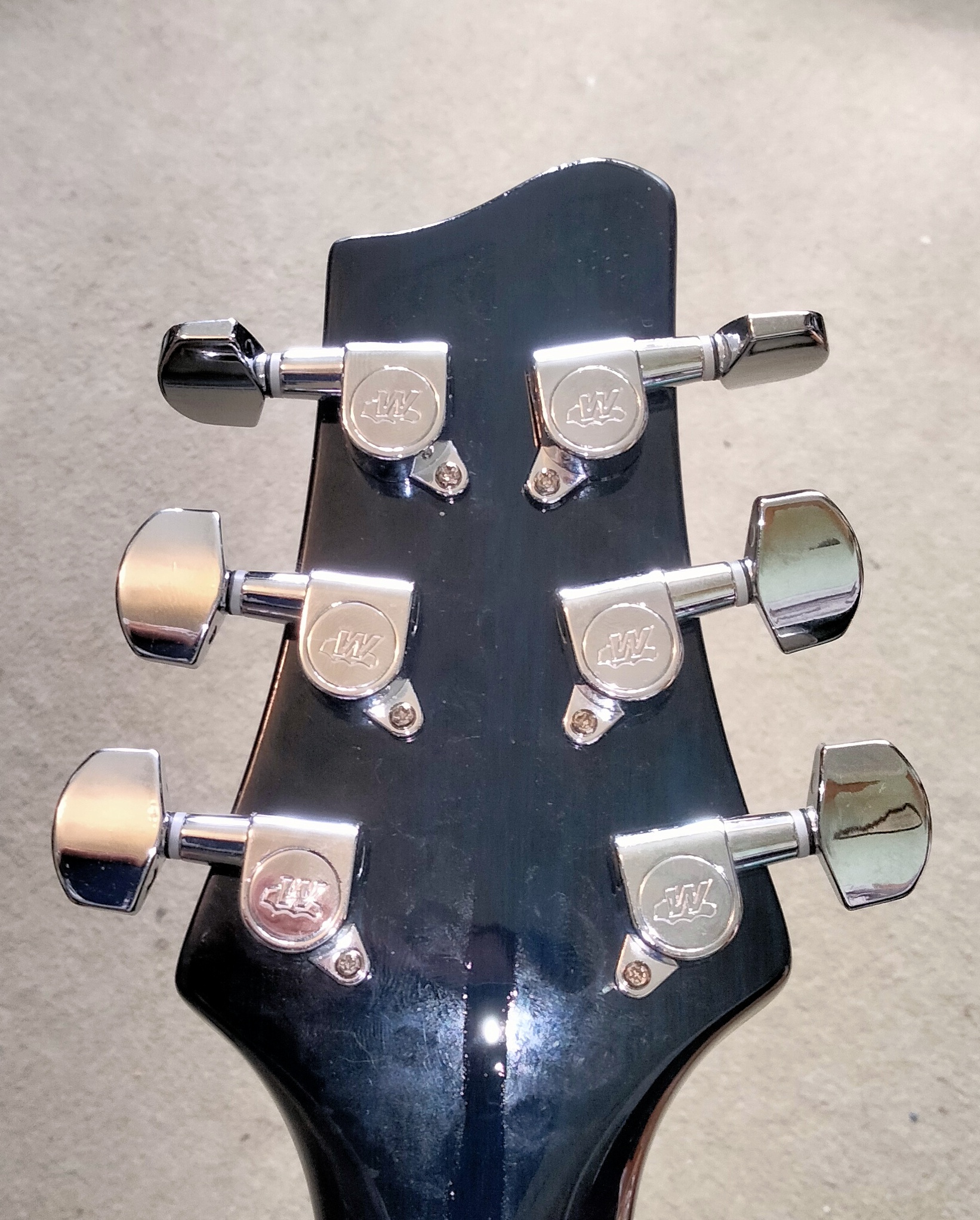
A spare set of Wilkinson tuners, left over from another project, were calling to me. They went on with the new strings. It did indeed make a big improvement.
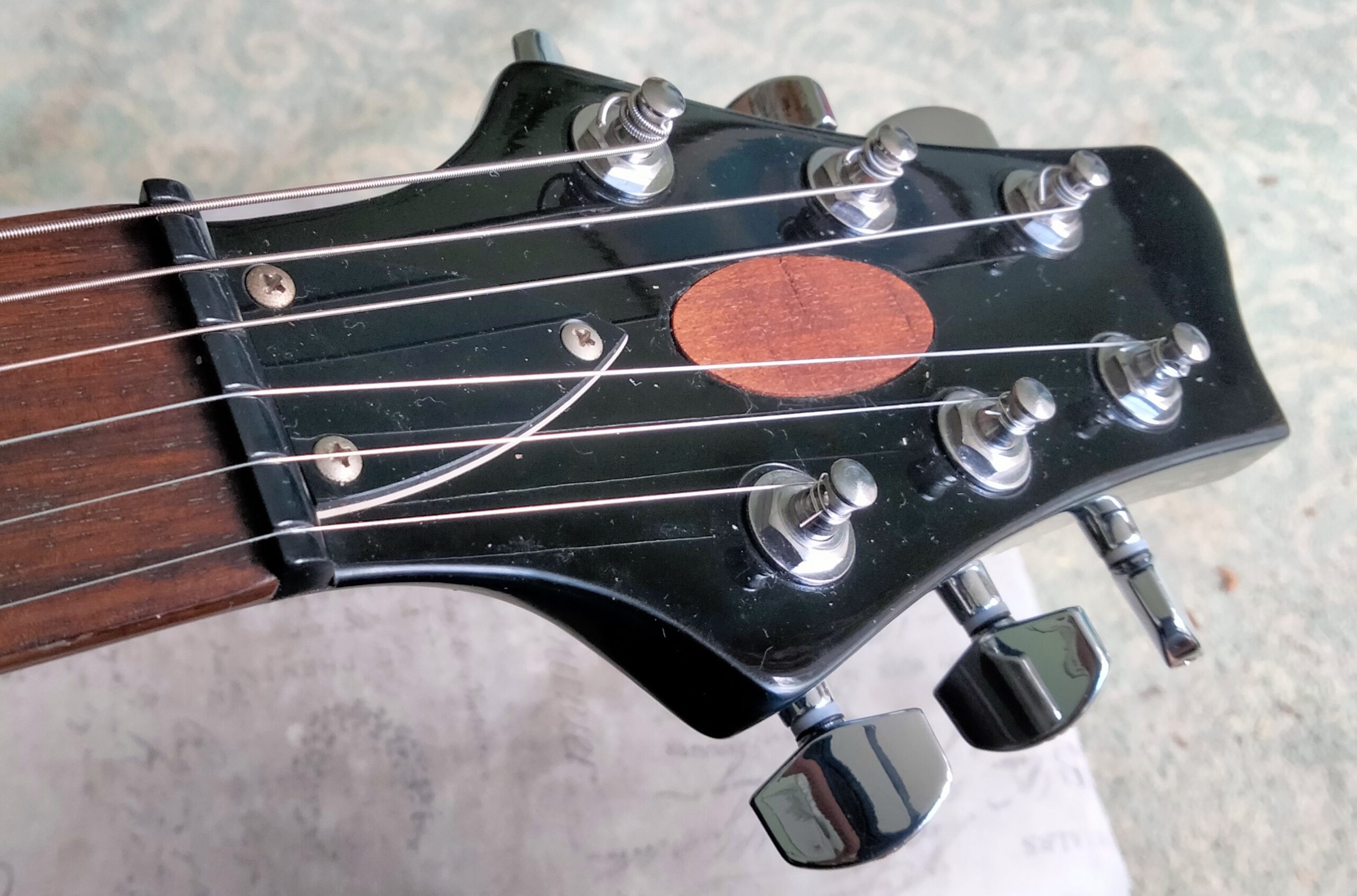
On the other side of the headstock lurked another problem. The original logo was a hideous thing. I also think it distracted from what the guitar is now by suggesting a cheap brand. It had to go. The gap left was filled with an oval of mahogany which I treated with Lemon Oil to echo the finish on the fretboard.
Setup.
At some point this guitar has clearly been through the hands of a good tech. The setup is already absolutely on the money and the frets are excellent. All I did was a slight tweak of the truss rod and a quick fret polish to make them even smoother under the fingers.
The only other adjustment needed was the pickup height. Only to be expected when the pickups have been changed.
Playing
This guitar is a pleasure to play. The action is fantastic, largely due to the unknown tech who kissed it before it was mine. The PRS pickups provide delightful tone, with the “partial split” available from the pull pot mixing things up nicely.
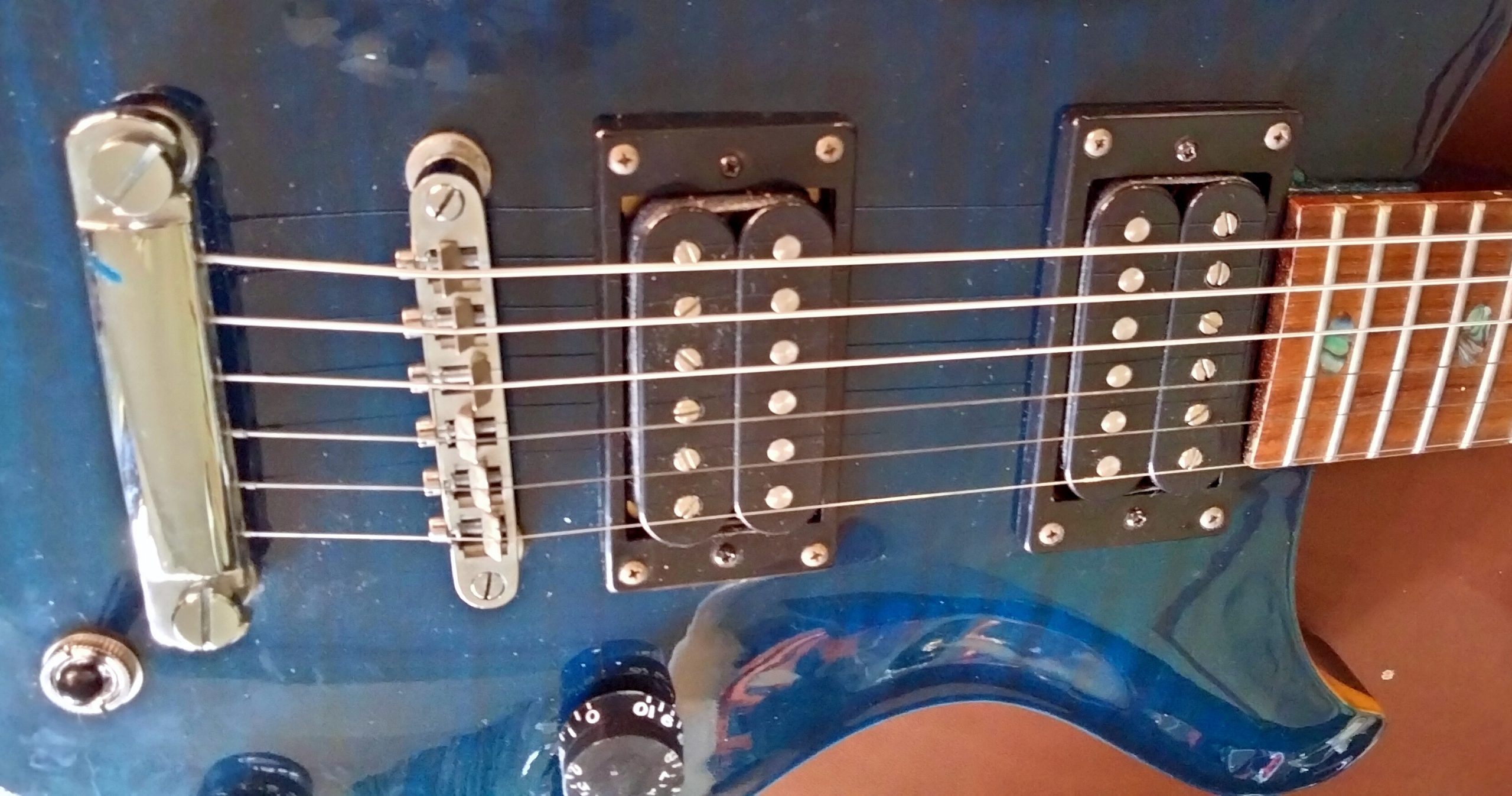
It’s also a very smart looking guitar, particularly when the light hits it right and you see the flame in the finish.
It’s not a PRS. Never could be. It is though, a very nice guitar which captures much of the PRS Essence.
For an overall outlay of only about £100, it’s a keeper.